Key Takeaways
- Private jet vs first class is ultimately a choice between flexibility and convenience
- Private jet travel offers complete control over schedule and airports
- First class provides a premium commercial experience but remains restricted by airline operations
- Time savings with private jet charter can be substantial, particularly for business travel
Private jet vs first class: understanding the real difference
The comparison between private jet vs first class is one of the most common considerations for those exploring premium travel. At a glance, both options offer comfort, exclusivity, and a high standard of service. However, the similarities largely end there.
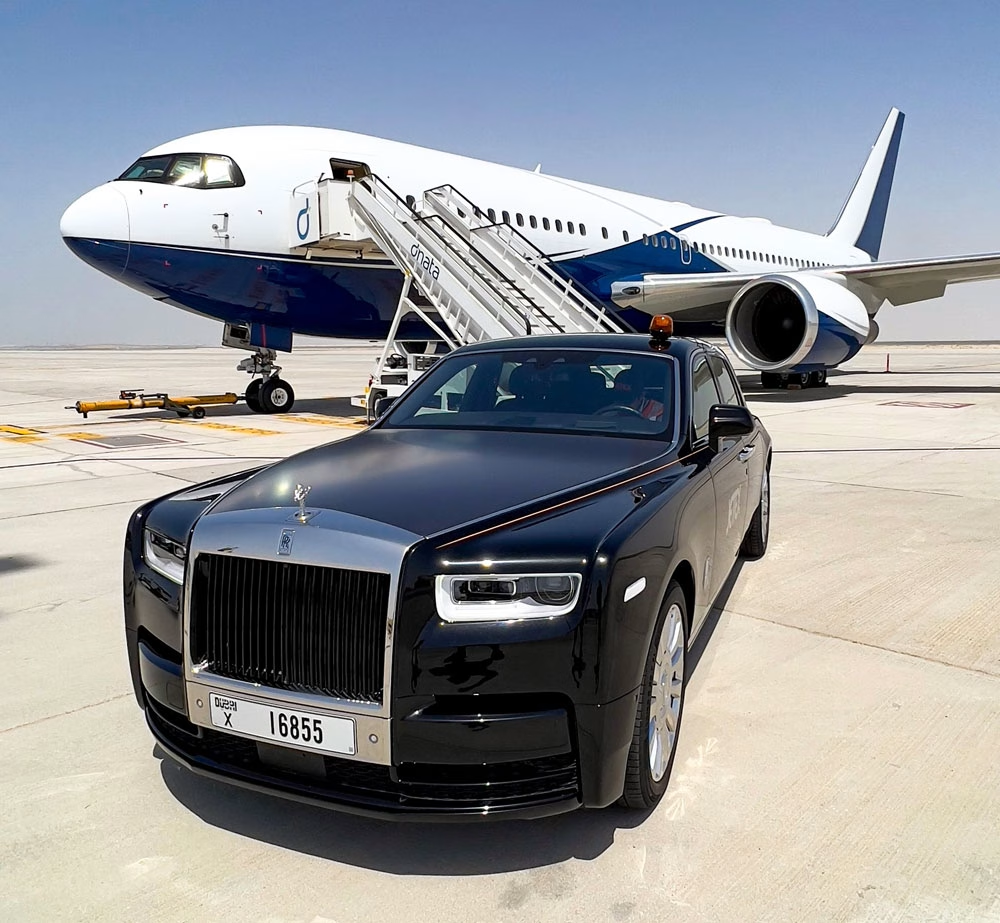
First class represents the highest tier of commercial aviation, designed to enhance the airline experience through refined seating, dining, and service. Private jet charter, by contrast, removes the commercial framework entirely. It is not simply a more luxurious seat, it is an entirely different way of travelling.
For clients evaluating private jet vs first class for business travel, the decision often comes down to control, efficiency, and the value of time.
Flexibility and control
The most defining difference in the private jet vs first class comparison is flexibility.
First class passengers are still bound by airline schedules, routes, and airport infrastructure. Even with priority boarding and fast-track security, the experience is structured around a fixed timetable. Flights depart at set times, from specific airports, and delays remain outside the traveller’s control.
Private jet charter operates on an entirely different principle. The aircraft departs from the client’s chosen most convenient airport and flies directly to the desired destination. This flexibility extends to last-minute changes, multi-stop itineraries, and the ability to adapt travel plans in real time.
For business travellers, this level of control is often the deciding factor. The ability to align travel precisely with meetings and commitments can significantly reduce downtime and increase productivity.
Time efficiency: the true value of private aviation
Time is one of the most important variables in the private jet vs first class debate, yet it is often underestimated.
While first-class passengers benefit from faster check-in and boarding, they still need to arrive at the airport well in advance of departure. Security procedures, boarding processes, and potential delays all contribute to the overall journey time.
Private jet travel eliminates much of this friction. Passengers typically arrive at a private terminal just minutes before departure, bypassing the queues and congestion associated with commercial airports. Upon arrival, they disembark quickly and can continue their journey without delay.
On shorter routes, the time saved can be several hours in total. On more complex itineraries involving multiple stops, the efficiency gains become even more pronounced.
For executives and decision-makers, this is where private jet charter begins to justify its cost.
Comfort and onboard experience
Comfort is often the starting point for those comparing private jet vs first class, and both options perform well in this regard. First class cabins offer spacious seating, high-quality dining, and attentive service, particularly on long-haul flights.
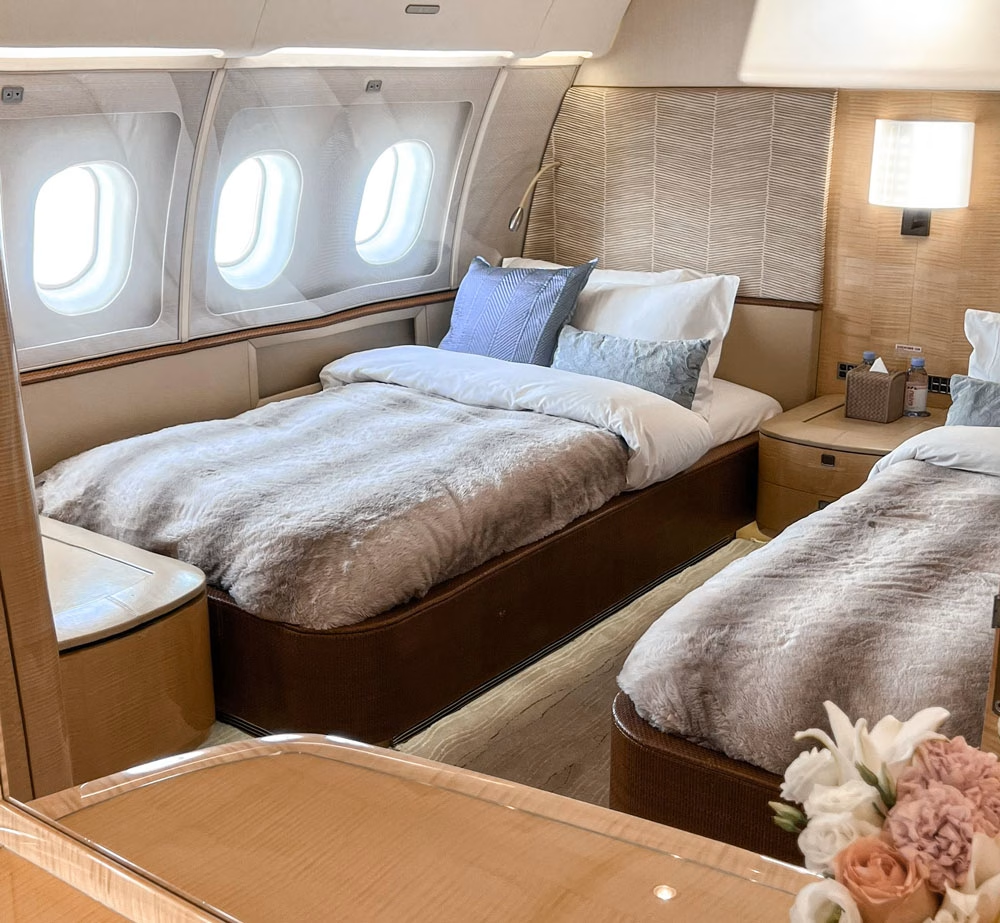
However, private jet charter elevates the experience further by removing the constraints of a shared cabin. Instead of a seat, passengers have access to an entire aircraft, configured to their needs.
Aircraft such as the Airbus ACJ319, provide a cabin environment that supports both work and relaxation. Passengers can move freely, hold meetings, dine privately, or rest in a quiet, controlled setting.
The absence of other passengers also introduces a level of privacy that is simply not possible in commercial aviation. For high-profile individuals or sensitive business discussions, this can be a critical advantage.
Privacy and discretion
Privacy is another key differentiator in the private jet vs first class comparison.
Even in the most exclusive first-class cabins, passengers share the space with others. While the experience is refined, it is not private. Conversations can be overheard, and interactions with other passengers are unavoidable.
Private jet charter, on the other hand, offers complete discretion. The aircraft is dedicated solely to the client and their guests, ensuring confidentiality.
For corporate leaders, legal teams, and government officials, this level of privacy is often essential rather than optional.
Cost comparison: private jet vs first class
Cost is often the most visible difference between private jet vs first class, but it is also the most nuanced.
First class tickets on long-haul routes can range from several thousand pounds to well over $13,000 per seat, depending on the airline and route. This pricing structure is fixed per passenger.
Private jet charter cost, by contrast, is calculated per aircraft. A short European flight may start from as little as $13,000, while long-haul journeys will typically exceed $135,000, depending on the aircraft used.
At first glance, this makes private jet travel appear significantly more expensive. However, when travelling as a group, the cost per passenger can become more comparable. In addition, the value of time saved and increased productivity often offsets the financial difference.
Airport access and convenience
Another important consideration in the private jet vs first class comparison is airport access.
Commercial airlines operate from major hubs, which may not always be the most convenient option. Travellers often need to factor in additional ground transport time to reach their final destination.
Private jets, by contrast, can operate from a wider range of airports, including smaller regional locations. This allows passengers to depart closer to home and arrive closer to their destination.
For example, instead of flying into a major international airport and transferring onwards, a private jet can land at a smaller airport located much closer to the final destination.
This level of convenience is particularly valuable for business travellers operating on tight schedules.
When first class makes sense
Despite the advantages of private aviation, first class remains a strong option in certain scenarios.
For individual travellers on long-haul routes, particularly where flexibility is less important, first class offers a high level of comfort at a lower cost. It is also a practical choice when travelling between major global hubs with frequent airline service.
Airlines represented by organisations such as the International Air Transport Association continue to invest heavily in improving the first-class experience, ensuring that it remains competitive within the premium travel market.
When private jet charter is the better choice
Private jet charter becomes the preferred option when flexibility, time efficiency, and privacy are priorities.
This is particularly true for:
- Business travel with tight or changing schedules
- Group travel where coordination is essential
- Journeys involving multiple destinations
- High-profile individuals requiring discretion
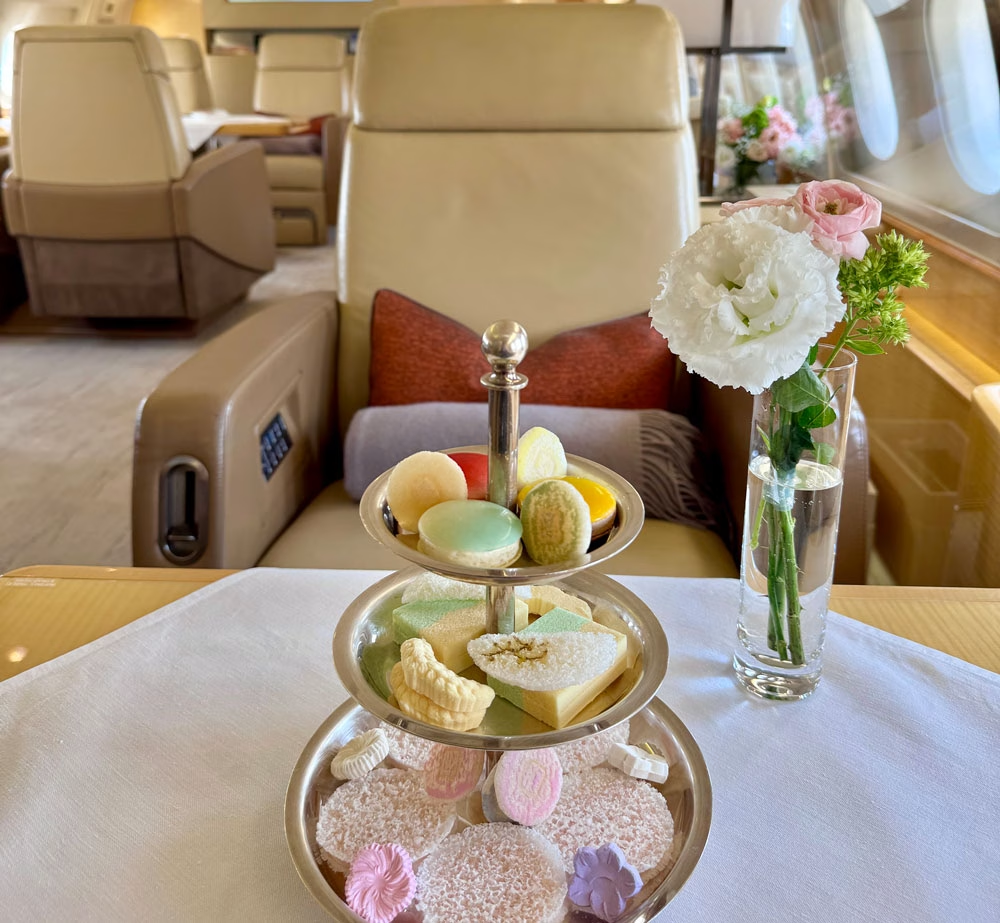
The in-flight experience is also vastly elevated. Take dining, for example, when travelling first class, the traveller chooses from a fixed menu. For private travellers, the entire menu is curated to the client’s exact preferences and dietary restrictions.
In these situations, the advantages of private aviation extend far beyond comfort, delivering tangible operational benefits
It depends on priorities. Private jets offer greater flexibility, privacy, and time efficiency, while first class provides a premium commercial experience
Yes, when considering total journey time, including airport processes and delays.
Private jets are more expensive overall, but the cost per passenger can be competitive for groups.
First class is highly comfortable, but private jets offer more space and complete privacy.
When flexibility, privacy, and time efficiency are critical factors.