
Key Takeaways
- Group private jet charter allows entire teams or parties to travel together on a single aircraft
- Large-cabin aircraft offer significantly more space than traditional private jets
- Pricing is based on the aircraft, making the cost per passenger more efficient for larger groups
- Ideal for corporate travel, sports teams, executive delegations, significant personal and family events, artists’ tours
- VIP airliners provide unmatched privacy, flexibility, and onboard functionality
Redefining group travel in private aviation
Group travel has traditionally been one of the more complex challenges within aviation. Coordinating multiple passengers across commercial flights, managing schedules, and maintaining consistency across a team can introduce inefficiencies that quickly compound.
Group private jet charter offers a fundamentally different solution. Rather than adapting to airline schedules and infrastructure, the aircraft is dedicated entirely to the group, allowing travel to be structured around passengers’ needs rather than the system’s limitations.
For organisations operating at a senior level, or for large private groups travelling together, this shift from reactive to controlled travel is often transformative. It allows entire teams to move as a single unit, arriving together, prepared, and aligned.
What is group private jet charter?
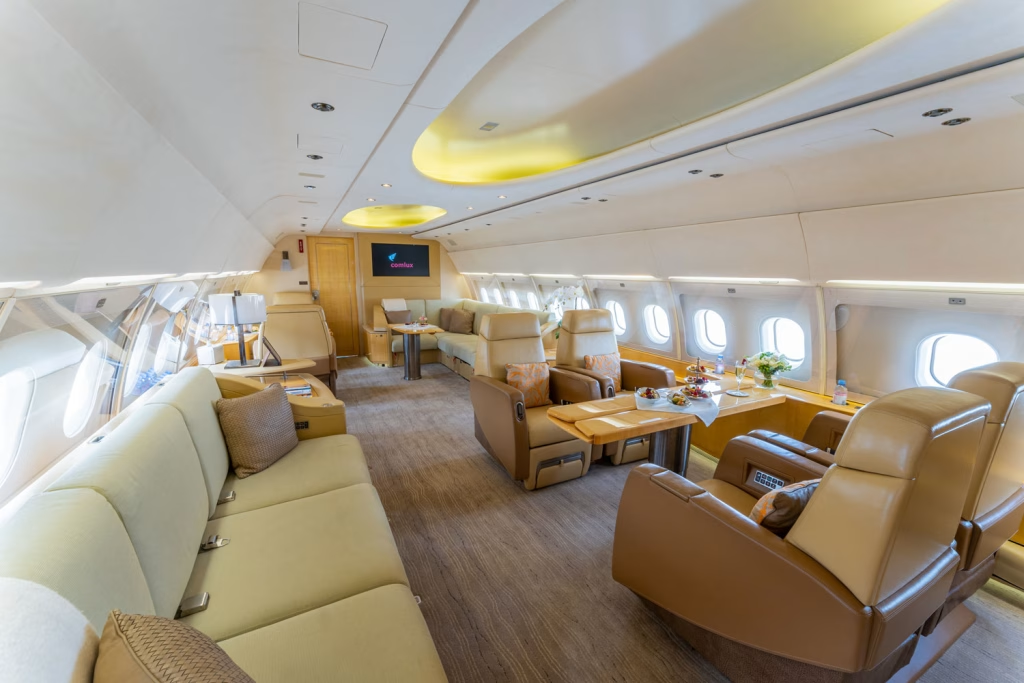
Group private jet charter refers to the use of a single aircraft to transport a larger number of passengers, typically 15 to over 50, depending on the aircraft configuration.
Unlike traditional private jets, which are designed for smaller groups, this form of private aviation relies on large-cabin aircraft such as the ACJ 319 or BBJ 767 SkyLady. These aircraft are based on commercial airliner platforms but are reconfigured to provide a fully bespoke, luxury environment.
This distinction is important. While many providers position themselves as offering “private jet for large groups,” few operate aircraft at this scale. As a result, the experience offered by VIP airliners differs significantly from standard charter options.
Why large groups choose private jet charter
The decision to use private jet charter for large groups is rarely based on a single factor. Instead, it reflects a combination of logistical, operational, and experiential considerations.
One of the most immediate advantages is alignment. When travelling commercially, even minor delays or disruptions can cause a group to become fragmented. With group private jet charter, the entire party travels together, ensuring consistency from departure to arrival.
Flexibility is equally important. Departure times can be adjusted to suit the group’s schedule, rather than the other way around. This is particularly valuable for corporate teams working across tight timelines or for events where timing is critical.
Privacy also plays a central role. Whether for executive discussions, high-profile individuals, or sensitive travel requirements, the ability to operate within a completely private environment is often essential.
Aircraft designed for group travel
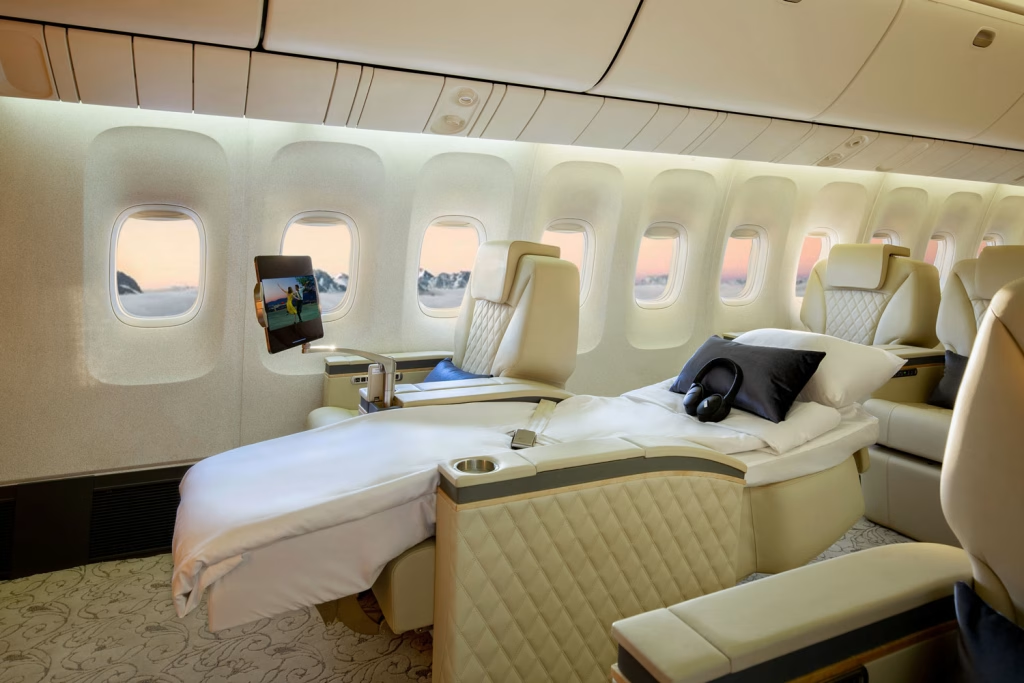
The aircraft used for group private jet charter ultimately defines the experience. In this segment of private aviation, large-cabin VIP airliners offer a level of space, range, and onboard functionality that goes far beyond what smaller aircraft can provide, particularly for executive group travel and complex itineraries.
At the centre of this capability is the BBJ 767 SkyLady, a flagship aircraft within the Comlux fleet and a benchmark for corporate jet charter at scale. Designed for long-range group private jet charter, it provides a highly adaptable cabin environment with multiple zones, including private suites, meeting areas, and lounge spaces. This allows passengers to work, collaborate, or rest in complete privacy, making it particularly well-suited to business travel, government delegations, and high-value group movements.
For organisations managing international schedules, the ability to conduct meetings, review strategy, or simply maintain continuity while in the air is a defining advantage. On longer routes, this transforms private jet charter from a transport solution into an extension of the working environment.
Complementing this capability, aircraft such as the Airbus ACJ TwoTwenty support smaller group private jet charter requirements or more regional missions. While operating at a different scale, they still provide a refined onboard experience and are often used where flexibility and efficiency are key considerations.
Together, these aircraft demonstrate how corporate jet charter for large groups is not simply about capacity, but about delivering a coordinated, efficient, and highly functional travel solution. Rather than separating travel from business activity, group private jet charter integrates the two, ensuring that time in the air remains productive, controlled, and aligned with the journey’s overall objectives..
Cost efficiency and value
At first glance, the cost of group private jet charter may appear significant. However, the pricing model is fundamentally different from commercial travel.
Private jet charter cost is based on the aircraft rather than individual seats. As a result, the cost per passenger becomes more efficient as the group size increases. For organisations moving large teams, this can create a more balanced cost structure than initially expected.
Beyond the financial aspect, the value of group charter lies in efficiency. Time saved through reduced airport processes, direct routing, and coordinated travel can have a measurable impact on productivity.
Use cases for luxury group charter
Group private jet charter is used across a wide range of scenarios, each driven by the need for coordination, discretion, and control. While the requirements may differ, the underlying objective remains consistent: to move people efficiently while maintaining a high standard of experience.
Sports teams are one of the most established users of private aviation. Travelling together ensures consistency in preparation, minimises disruption, and allows players and staff to operate within a controlled environment. Equipment, medical staff, and support teams can all be accommodated on a single aircraft, removing the logistical complexity of commercial travel.
Beyond sport, corporate jet charter is increasingly used for executive teams and business travel. Board members travelling to international meetings, roadshows, or multi-city engagements benefit from the ability to align schedules and use time productively while in the air. This is particularly relevant where timing is critical, and travel forms part of the working process rather than a break from it.
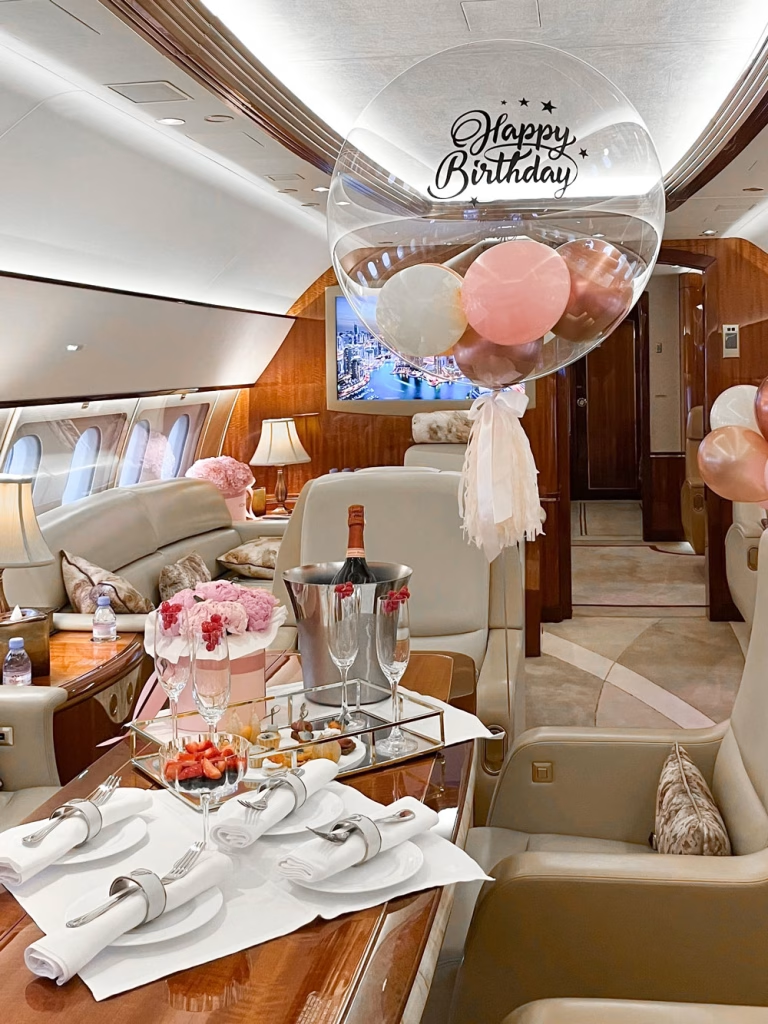
Private jet for large groups is also widely used for personal travel, particularly for milestone occasions. Destination weddings are a good example, where families and guests can travel together to locations such as the Mediterranean, the Middle East, or the Caribbean. Similarly, birthday celebrations, anniversary trips, and multi-generational family holidays often require a level of coordination that commercial aviation struggles to support. Group private jet charter allows these journeys to be structured around the occasion itself, rather than the limitations of airline schedules.
In the entertainment industry, private aviation plays a critical role. Bands and artists touring internationally frequently rely on group charters to move between cities on tight schedules. The ability to transport performers, crew, and equipment together ensures continuity and reduces the risk of delays impacting performances. In a similar way, film and television production teams, including major streaming platforms such as Netflix, use private jet charter when shooting overseas. Moving cast, crew, and key personnel efficiently between locations is often essential to maintaining production timelines.
These varied use cases highlight a consistent theme. Group private jet charter is not simply about luxury or convenience. It is about creating a controlled, efficient environment where travel supports the broader objective, whether that is performance, business, or a significant personal event.
Group Charter vs Jet Brokers
One of the most important distinctions in this space is the difference between operators and brokers.
Many companies offering corporate jet charter act primarily as intermediaries, sourcing aircraft from third-party providers. While this can provide access to a wide range of options, it often results in a more transactional experience.
Operators specialising in VIP airliners, by contrast, focus on delivering a consistent, high-quality service built around specific aircraft types. This allows for greater control over both the operational and onboard experience.
For clients seeking private-jet solutions for executive group travel, this distinction can be critical. The difference between a brokered experience and a fully managed operation is often reflected in both reliability and overall quality.
Airport Access and Operational Flexibility
Group private jet charter also offers advantages in terms of airport access. Large-cabin aircraft can operate from a wide range of international airports, while still benefiting from dedicated private terminal facilities.
This allows groups to depart from locations that are most convenient, reducing the need for additional ground transport. It also enables more efficient arrivals, particularly when travelling to destinations with multiple airport options.
For global organisations, this flexibility supports more dynamic travel planning, allowing routes to be adjusted in response to changing requirements.
The Future of Group Private Aviation
As business travel continues to evolve, the demand for group private jet charter is expected to grow. Organisations are placing greater emphasis on efficiency, security, and flexibility, all of which align with the strengths of private aviation.
At the same time, advances in aircraft design and operational technology are enhancing the capabilities of large-cabin aircraft. This is further strengthening the position of VIP airliners within the market.
For providers focused on this segment, the opportunity lies in delivering a level of service that goes beyond transportation, creating a seamless and integrated travel experience.
Depending on the aircraft, this can range from around 15 to over 50 passengers.
Yes, as the cost is shared among passengers, it is more efficient per person.
Large-cabin aircraft such as the BBJ 767 SkyLady are commonly used.
Yes, many VIP airliners are designed for intercontinental travel.
Group private jet charter is used by corporate teams, sports organisations, entertainment professionals such as touring artists and film production crews, and private clients travelling for significant occasions, including destination weddings, milestone celebrations, and international family trips.