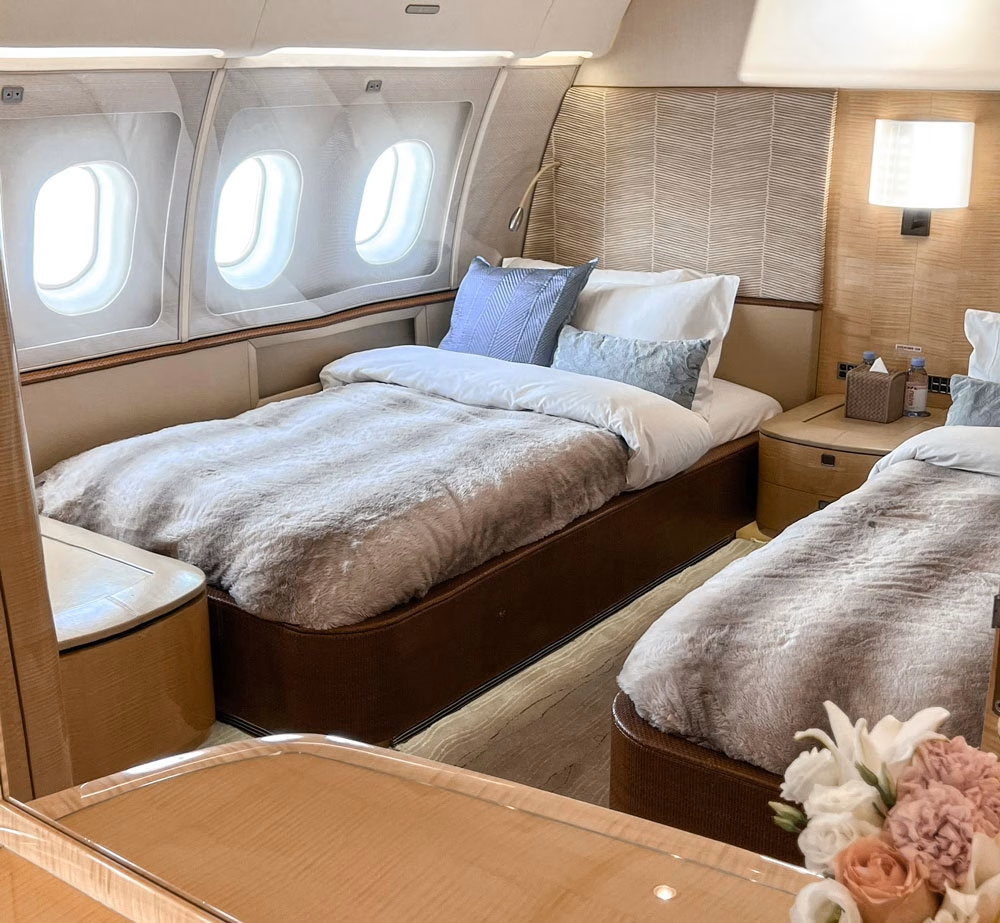
• The right aircraft management company should protect the owner’s asset, not simply operate the aircraft.
  • Safety, transparency, compliance and reliability should be the foundation of any aircraft management agreement.
  • Owners should look for global operational experience, strong reporting, maintenance oversight and clear financial controls.
  • Aircraft management should be tailored around how the owner intends to use the aircraft.
  • A good management provider helps preserve aircraft value and reduce ownership complexity.    

Choosing the right aircraft management company is one of the most important decisions a private or corporate aircraft owner will make. Owning an aircraft is a significant investment, but it also comes with complex operational, financial and regulatory responsibilities.

The role of an aircraft management provider is to remove that complexity while ensuring the aircraft is operated safely, efficiently and transparently. At the highest level of private aviation, aircraft management is not simply about arranging crew and scheduling flights. It is about protecting a high-value asset while ensuring confidence every time the aircraft is used.

For many owners, the right management company becomes a long-term strategic partner that supports operations, preserves aircraft value and simplifies ownership.

An aircraft management company looks after the day-to-day operation of a privately or corporately owned aircraft. This can include flight operations, crew management, maintenance planning, regulatory compliance, budgeting, financial reporting, insurance coordination, hangarage, dispatch and operational oversight.

The scope of aircraft management services will vary depending on the owner’s requirements. Some owners use their aircraft privately only, while others may want the option of commercial charter operation when the aircraft is not being used by the owner. These models involve different regulatory structures and operational requirements, which is why experienced management is essential.

Comlux positions its aircraft management services around safety, transparency and reliability, supported by aviation structures and Air Operator Certificates across multiple jurisdictions.

Safety should be the first measure of any aircraft management provider. Before considering cost or convenience, owners should understand how the management company approaches operational standards, crew training, maintenance discipline and risk management.

A credible aircraft management company should demonstrate strong safety systems, documented procedures and a proven operational track record. Aircraft management is ultimately a trust-based relationship, where the provider is responsible for both the aircraft and everyone onboard.

Comlux engineer performing safety checks

Transparency is another critical factor within aircraft management. Aircraft ownership involves high operating costs, including maintenance, crew, insurance, fuel, handling, hangarage and regulatory expenses. Without clear reporting, owners can quickly lose visibility over how the aircraft is being managed.

A strong management provider should offer detailed operational and financial reporting, allowing owners to understand where money is being spent and how the aircraft is being operated.

No two aircraft owners are the same. Some owners require frequent long-haul travel, while others fly occasionally and want the aircraft available at short notice. Some owners may wish to explore commercial charter opportunities, while others prefer fully private operation.

This is why aircraft management should never feel generic. A strong provider should tailor its operational structure around the owner’s specific requirements, aircraft type and long-term objectives.

Private aircraft are often operated internationally, meaning aircraft management requires more than local operational knowledge. Owners need a provider with experience across jurisdictions, airport systems, permissions and regulatory frameworks.

This is particularly important where aircraft operate across continents or under different registration structures. The management company must understand how to maintain compliance while preserving operational flexibility.

When choosing an aircraft management provider, owners should focus on operational depth rather than polished marketing. Safety record, financial transparency, aircraft-specific expertise, maintenance oversight and international operational capability are all important factors.

The strongest providers combine technical expertise with clear communication and long-term operational planning.

Aircraft owners should be cautious of management companies that focus heavily on promises without explaining operational processes. Low management fees can also be misleading, if they are accompanied by poor reporting or weak maintenance oversight.

A lack of transparency is one of the biggest warning signs. Owners should always understand how their aircraft is being managed, maintained and operated.

Aircraft management should support long-term asset value as well as day-to-day operation. Maintenance planning, documentation, hangarage, compliance and operational discipline all influence future resale potential.

A well-managed aircraft is easier to operate, easier to evaluate and easier to present to the market when the time comes to sell or upgrade. Good management, therefore, becomes part of the wider ownership strategy.


What does an aircraft management company do?

An aircraft management company oversees the operation of a private or corporate aircraft, including crew, maintenance, compliance, budgeting and operational support.

How do I choose the right aircraft management provider?

Look for strong safety standards, transparent reporting, maintenance expertise and international operational experience.

Can aircraft management include commercial charter?

Yes, depending on the owner’s requirements and regulatory structure, some aircraft may operate privately and commercially.

Why is transparency important in aircraft management?

Aircraft ownership involves significant operating costs, so owners need clear visibility over financial and operational performance.

How does aircraft management preserve resale value?

Good management supports maintenance planning, documentation, compliance and overall asset condition.


  • Private jet business travel transforms flight time into productive working time
  • Large-cabin aircraft provide dedicated spaces for meetings, rest, and collaboration
  • Business jet productivity is driven by privacy, connectivity, and flexibility
  • Private jet internet connectivity and onboard systems enable seamless workflow continuity
  • For executives, time efficiency is often the most valuable advantage      

In business aviation, the concept of luxury is often misunderstood. While comfort and service are part of the experience, the true value of private jet travel lies elsewhere. For executives, decision-makers, and global organisations, time is the defining factor.

Private jet business travel is not simply about reaching a destination. It is about reclaiming time that would otherwise be lost to inefficiencies. Commercial aviation, even at the highest level, introduces constraints, fixed schedules, extended airport processes, and environments that are not designed for focused work.

By contrast, private aviation removes these barriers. The journey becomes an extension of the working day, rather than an interruption to it.

The idea of a “flying office” is often used loosely, but in the context of large-cabin aircraft, it becomes a practical reality.

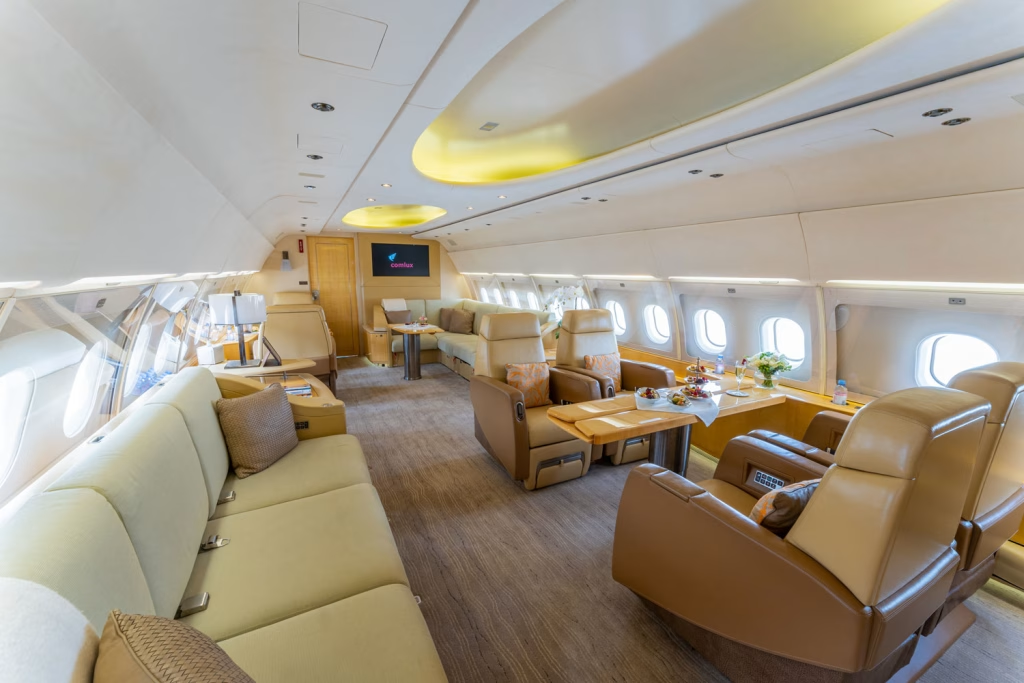
Aircraft such as the Challenger 850 are designed to provide multiple functional zones within a single cabin. These may include meeting areas, lounge spaces, and private seating configurations that enable teams to collaborate while in flight.

This is not simply a matter of comfort. It fundamentally changes how time in the air is used. Meetings that would otherwise be scheduled after arrival can take place during the journey. Decisions can be made in real time, reducing delays and increasing efficiency.

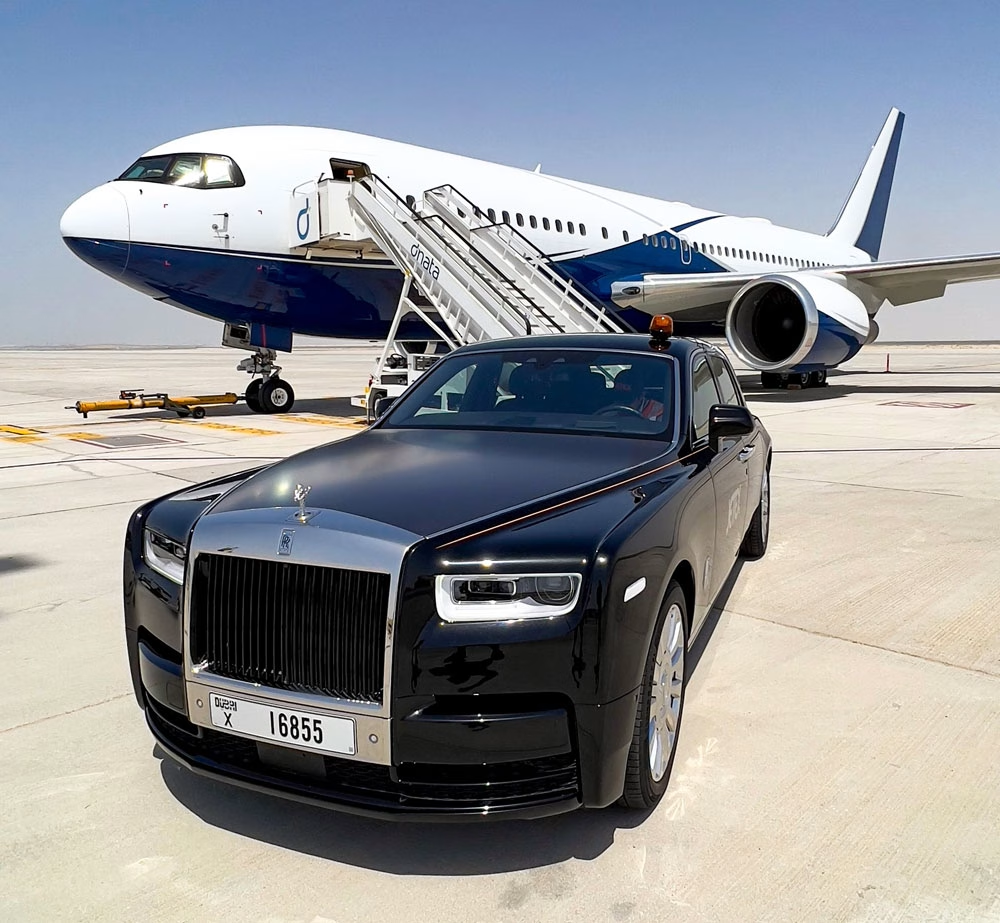
For larger groups or more complex travel requirements, aircraft such as the Boeing BBJ 767 extend this concept further. With greater cabin space and range, they allow entire organisations to operate seamlessly across long-haul routes.

One of the most overlooked aspects of business jet productivity is privacy. In commercial environments, even in first class, the ability to work without interruption is limited. Conversations are overheard, and the presence of other passengers introduces constraints.

Private jet travel eliminates these variables entirely. The aircraft is dedicated to the client, creating an environment where confidentiality is assured. For senior executives, legal teams, and high-level negotiations, this level of discretion is essential.

This also supports focus. Without the distractions of a commercial cabin, passengers can work more effectively, whether reviewing documents, conducting meetings, or preparing for engagements upon arrival.

Connectivity plays a central role in modern business travel. The ability to remain connected while in transit is no longer optional; it is expected.

Private jet connectivity solutions have evolved significantly, allowing passengers to maintain access to email, messaging platforms, and, in many cases, video conferencing. While connectivity can vary depending on route and aircraft configuration, the objective is clear: to ensure continuity.

For organisations operating globally, this means that being in the air no longer equates to being offline. Work can continue uninterrupted, and communication remains consistent.

This is a key differentiator in the private jet business travel benefits conversation. It is not simply about travelling faster, but about maintaining momentum.

Business jet productivity is not limited to the time spent in the air. It extends to the entire travel experience.

Private jet passengers avoid the delays associated with commercial airports, including long check-in processes, security queues, and boarding procedures. Instead, they move through dedicated private terminals, often arriving shortly before departure.

This reduction in ground time can save several hours on a single journey. For executives managing tight schedules, these efficiencies accumulate quickly.

Additionally, private aviation allows for more direct routing. Aircraft can operate from a wider range of airports, reducing the need for additional ground transport and bringing passengers closer to their destination.

The ability to work on a private jet is often cited as a benefit, but the reality goes deeper. It is not simply about having space to open a laptop. It is about creating an environment where meaningful work can take place.

In a private setting, teams can collaborate without restriction. Documents can be reviewed, strategies discussed, and decisions made in real time. This changes the dynamic of travel, turning it into an active part of the business process.

For CEOs and senior leaders, this is particularly valuable. The ability to use travel time productively can directly impact organisational performance.

When comparing private jet vs first class, productivity becomes a key differentiator.

First class cabins offer comfort and service, but they are not designed as work environments. Space is limited, privacy is restricted, and connectivity may not support more complex tasks.

Private jet travel, by contrast, is built around the passenger’s needs. The environment can be configured to support specific requirements, whether that involves meetings, presentations, or quiet focus.

This is why many organisations view private aviation not as a luxury, but as a tool.

For high-level decision-makers, time is often the most constrained resource. The ability to reduce travel inefficiencies and maintain productivity during transit can have a significant impact.

Private jet business travel aligns with this priority. It allows executives to operate on their own schedule, accommodate last-minute changes, avoid unnecessary delays, and maximise the value of every hour.

This is particularly relevant in industries where speed and responsiveness are critical. The ability to move quickly and efficiently between locations can create a competitive advantage.


Can you work effectively on a private jet?

Yes, private jet cabins are designed to support productivity, including meetings and focused work.

Do private jets have WiFi?

Most private jets offer onboard high-speed WiFi, allowing passengers to stay connected during the flight. Comlux uses high-speed internet connectivity by Star Link.

Is private jet travel better for business?

For many organisations, the time savings and productivity benefits make it highly effective.

What makes a private jet a “flying office”?

The combination of space, privacy, and connectivity allows it to function as a workspace.

Is private jet travel worth it for executives?

For senior leaders, the ability to maximise time and maintain efficiency is often a key advantage.


  • Group private jet charter allows entire teams or parties to travel together on a single aircraft
  • Large-cabin aircraft offer significantly more space than traditional private jets
  • Pricing is based on the aircraft, making the cost per passenger more efficient for larger groups
  • Ideal for corporate travel, sports teams, executive delegations, significant personal and family events, artists’ tours
  • VIP airliners provide unmatched privacy, flexibility, and onboard functionality      

Group travel has traditionally been one of the more complex challenges within aviation. Coordinating multiple passengers across commercial flights, managing schedules, and maintaining consistency across a team can introduce inefficiencies that quickly compound.

Group private jet charter offers a fundamentally different solution. Rather than adapting to airline schedules and infrastructure, the aircraft is dedicated entirely to the group, allowing travel to be structured around passengers’ needs rather than the system’s limitations.

For organisations operating at a senior level, or for large private groups travelling together, this shift from reactive to controlled travel is often transformative. It allows entire teams to move as a single unit, arriving together, prepared, and aligned.

BBJ 767 SkyLady cabin layout

Group private jet charter refers to the use of a single aircraft to transport a larger number of passengers, typically 15 to over 50, depending on the aircraft configuration.

Unlike traditional private jets, which are designed for smaller groups, this form of private aviation relies on large-cabin aircraft such as the ACJ 319 or BBJ 767 SkyLady. These aircraft are based on commercial airliner platforms but are reconfigured to provide a fully bespoke, luxury environment.

This distinction is important. While many providers position themselves as offering “private jet for large groups,” few operate aircraft at this scale. As a result, the experience offered by VIP airliners differs significantly from standard charter options.

The decision to use private jet charter for large groups is rarely based on a single factor. Instead, it reflects a combination of logistical, operational, and experiential considerations.

One of the most immediate advantages is alignment. When travelling commercially, even minor delays or disruptions can cause a group to become fragmented. With group private jet charter, the entire party travels together, ensuring consistency from departure to arrival.

Flexibility is equally important. Departure times can be adjusted to suit the group’s schedule, rather than the other way around. This is particularly valuable for corporate teams working across tight timelines or for events where timing is critical.

Privacy also plays a central role. Whether for executive discussions, high-profile individuals, or sensitive travel requirements, the ability to operate within a completely private environment is often essential.

The aircraft used for group private jet charter ultimately defines the experience. In this segment of private aviation, large-cabin VIP airliners offer a level of space, range, and onboard functionality that goes far beyond what smaller aircraft can provide, particularly for executive group travel and complex itineraries.

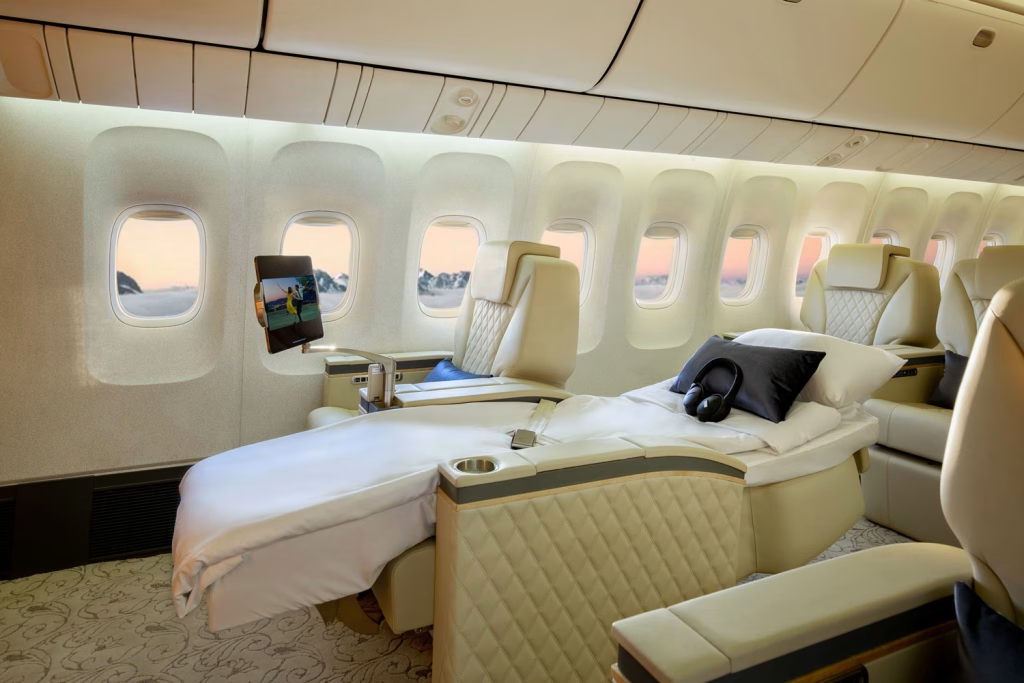
At the centre of this capability is the BBJ 767 SkyLady, a flagship aircraft within the Comlux fleet and a benchmark for corporate jet charter at scale. Designed for long-range group private jet charter, it provides a highly adaptable cabin environment with multiple zones, including private suites, meeting areas, and lounge spaces. This allows passengers to work, collaborate, or rest in complete privacy, making it particularly well-suited to business travel, government delegations, and high-value group movements.

For organisations managing international schedules, the ability to conduct meetings, review strategy, or simply maintain continuity while in the air is a defining advantage. On longer routes, this transforms private jet charter from a transport solution into an extension of the working environment.

Complementing this capability, aircraft such as the Airbus ACJ TwoTwenty support smaller group private jet charter requirements or more regional missions. While operating at a different scale, they still provide a refined onboard experience and are often used where flexibility and efficiency are key considerations.

Together, these aircraft demonstrate how corporate jet charter for large groups is not simply about capacity, but about delivering a coordinated, efficient, and highly functional travel solution. Rather than separating travel from business activity, group private jet charter integrates the two, ensuring that time in the air remains productive, controlled, and aligned with the journey’s overall objectives..

At first glance, the cost of group private jet charter may appear significant. However, the pricing model is fundamentally different from commercial travel.

Private jet charter cost is based on the aircraft rather than individual seats. As a result, the cost per passenger becomes more efficient as the group size increases. For organisations moving large teams, this can create a more balanced cost structure than initially expected.

Beyond the financial aspect, the value of group charter lies in efficiency. Time saved through reduced airport processes, direct routing, and coordinated travel can have a measurable impact on productivity.

Group private jet charter is used across a wide range of scenarios, each driven by the need for coordination, discretion, and control. While the requirements may differ, the underlying objective remains consistent: to move people efficiently while maintaining a high standard of experience.

Sports teams are one of the most established users of private aviation. Travelling together ensures consistency in preparation, minimises disruption, and allows players and staff to operate within a controlled environment. Equipment, medical staff, and support teams can all be accommodated on a single aircraft, removing the logistical complexity of commercial travel.

Beyond sport, corporate jet charter is increasingly used for executive teams and business travel. Board members travelling to international meetings, roadshows, or multi-city engagements benefit from the ability to align schedules and use time productively while in the air. This is particularly relevant where timing is critical, and travel forms part of the working process rather than a break from it.

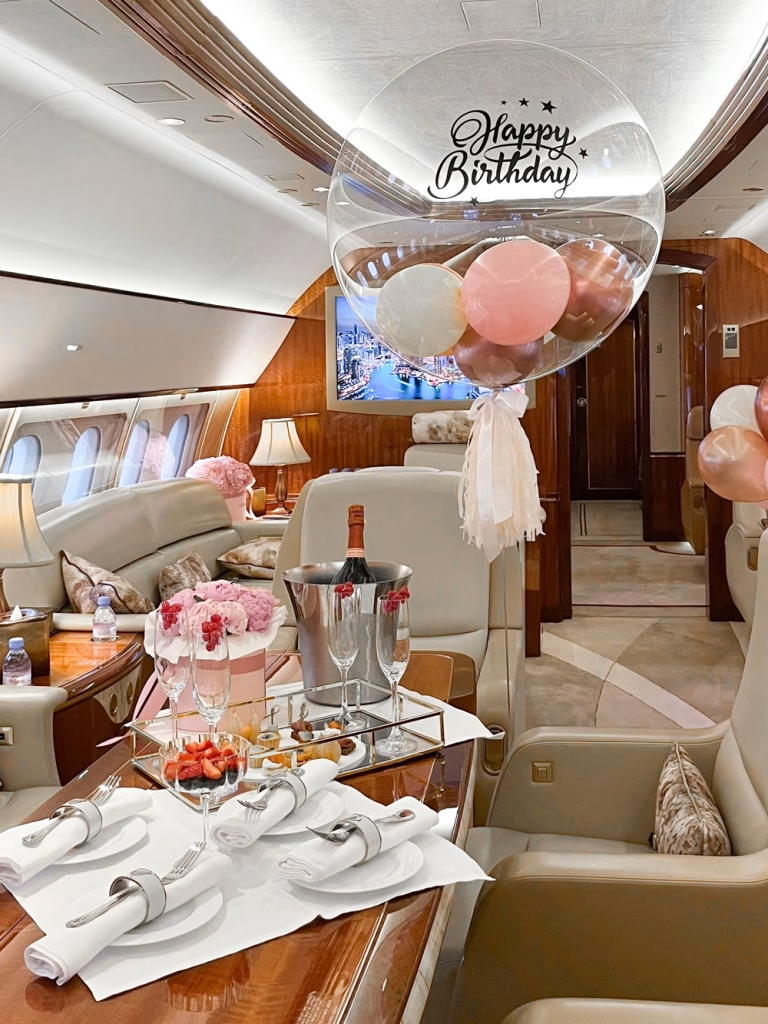
Private jet for large groups is also widely used for personal travel, particularly for milestone occasions. Destination weddings are a good example, where families and guests can travel together to locations such as the Mediterranean, the Middle East, or the Caribbean. Similarly, birthday celebrations, anniversary trips, and multi-generational family holidays often require a level of coordination that commercial aviation struggles to support. Group private jet charter allows these journeys to be structured around the occasion itself, rather than the limitations of airline schedules.

In the entertainment industry, private aviation plays a critical role. Bands and artists touring internationally frequently rely on group charters to move between cities on tight schedules. The ability to transport performers, crew, and equipment together ensures continuity and reduces the risk of delays impacting performances. In a similar way, film and television production teams, including major streaming platforms such as Netflix, use private jet charter when shooting overseas. Moving cast, crew, and key personnel efficiently between locations is often essential to maintaining production timelines.

These varied use cases highlight a consistent theme. Group private jet charter is not simply about luxury or convenience. It is about creating a controlled, efficient environment where travel supports the broader objective, whether that is performance, business, or a significant personal event.

One of the most important distinctions in this space is the difference between operators and brokers.

Many companies offering corporate jet charter act primarily as intermediaries, sourcing aircraft from third-party providers. While this can provide access to a wide range of options, it often results in a more transactional experience.

Operators specialising in VIP airliners, by contrast, focus on delivering a consistent, high-quality service built around specific aircraft types. This allows for greater control over both the operational and onboard experience.

For clients seeking private-jet solutions for executive group travel, this distinction can be critical. The difference between a brokered experience and a fully managed operation is often reflected in both reliability and overall quality.

Group private jet charter also offers advantages in terms of airport access. Large-cabin aircraft can operate from a wide range of international airports, while still benefiting from dedicated private terminal facilities.

This allows groups to depart from locations that are most convenient, reducing the need for additional ground transport. It also enables more efficient arrivals, particularly when travelling to destinations with multiple airport options.

For global organisations, this flexibility supports more dynamic travel planning, allowing routes to be adjusted in response to changing requirements.

As business travel continues to evolve, the demand for group private jet charter is expected to grow. Organisations are placing greater emphasis on efficiency, security, and flexibility, all of which align with the strengths of private aviation.

At the same time, advances in aircraft design and operational technology are enhancing the capabilities of large-cabin aircraft. This is further strengthening the position of VIP airliners within the market.

For providers focused on this segment, the opportunity lies in delivering a level of service that goes beyond transportation, creating a seamless and integrated travel experience.


How many passengers can a group private jet charter accommodate?

Depending on the aircraft, this can range from around 15 to over 50 passengers.

Is private jet charter cost-effective for large groups?

Yes, as the cost is shared among passengers, it is more efficient per person.

What aircraft are used for group charter?

Large-cabin aircraft such as the BBJ 767 SkyLady are commonly used.

Can group charters operate long-haul flights?

Yes, many VIP airliners are designed for intercontinental travel.

Who typically uses group private jet charter?

Group private jet charter is used by corporate teams, sports organisations, entertainment professionals such as touring artists and film production crews, and private clients travelling for significant occasions, including destination weddings, milestone celebrations, and international family trips.


  • Private jet vs first class is ultimately a choice between flexibility and convenience
  • Private jet travel offers complete control over schedule and airports
  • First class provides a premium commercial experience but remains restricted by airline operations
  • Time savings with private jet charter can be substantial, particularly for business travel       

The comparison between private jet vs first class is one of the most common considerations for those exploring premium travel. At a glance, both options offer comfort, exclusivity, and a high standard of service. However, the similarities largely end there.

First class represents the highest tier of commercial aviation, designed to enhance the airline experience through refined seating, dining, and service. Private jet charter, by contrast, removes the commercial framework entirely. It is not simply a more luxurious seat, it is an entirely different way of travelling.

For clients evaluating private jet vs first class for business travel, the decision often comes down to control, efficiency, and the value of time.

The most defining difference in the private jet vs first class comparison is flexibility.

First class passengers are still bound by airline schedules, routes, and airport infrastructure. Even with priority boarding and fast-track security, the experience is structured around a fixed timetable. Flights depart at set times, from specific airports, and delays remain outside the traveller’s control.

Private jet charter operates on an entirely different principle. The aircraft departs from the client’s chosen most convenient airport and flies directly to the desired destination. This flexibility extends to last-minute changes, multi-stop itineraries, and the ability to adapt travel plans in real time.

For business travellers, this level of control is often the deciding factor. The ability to align travel precisely with meetings and commitments can significantly reduce downtime and increase productivity.

Time is one of the most important variables in the private jet vs first class debate, yet it is often underestimated.

While first-class passengers benefit from faster check-in and boarding, they still need to arrive at the airport well in advance of departure. Security procedures, boarding processes, and potential delays all contribute to the overall journey time.

Private jet travel eliminates much of this friction. Passengers typically arrive at a private terminal just minutes before departure, bypassing the queues and congestion associated with commercial airports. Upon arrival, they disembark quickly and can continue their journey without delay.

On shorter routes, the time saved can be several hours in total. On more complex itineraries involving multiple stops, the efficiency gains become even more pronounced.

For executives and decision-makers, this is where private jet charter begins to justify its cost.

Comfort is often the starting point for those comparing private jet vs first class, and both options perform well in this regard. First class cabins offer spacious seating, high-quality dining, and attentive service, particularly on long-haul flights.

However, private jet charter elevates the experience further by removing the constraints of a shared cabin. Instead of a seat, passengers have access to an entire aircraft, configured to their needs.

Aircraft such as the Airbus ACJ319, provide a cabin environment that supports both work and relaxation. Passengers can move freely, hold meetings, dine privately, or rest in a quiet, controlled setting.

The absence of other passengers also introduces a level of privacy that is simply not possible in commercial aviation. For high-profile individuals or sensitive business discussions, this can be a critical advantage.

Privacy is another key differentiator in the private jet vs first class comparison.

Even in the most exclusive first-class cabins, passengers share the space with others. While the experience is refined, it is not private. Conversations can be overheard, and interactions with other passengers are unavoidable.

Private jet charter, on the other hand, offers complete discretion. The aircraft is dedicated solely to the client and their guests, ensuring confidentiality.

For corporate leaders, legal teams, and government officials, this level of privacy is often essential rather than optional.

Cost is often the most visible difference between private jet vs first class, but it is also the most nuanced.

First class tickets on long-haul routes can range from several thousand pounds to well over $13,000 per seat, depending on the airline and route. This pricing structure is fixed per passenger.

Private jet charter cost, by contrast, is calculated per aircraft. A short European flight may start from as little as $13,000, while long-haul journeys will typically exceed $135,000, depending on the aircraft used.

At first glance, this makes private jet travel appear significantly more expensive. However, when travelling as a group, the cost per passenger can become more comparable. In addition, the value of time saved and increased productivity often offsets the financial difference.

Another important consideration in the private jet vs first class comparison is airport access.

Commercial airlines operate from major hubs, which may not always be the most convenient option. Travellers often need to factor in additional ground transport time to reach their final destination.

Private jets, by contrast, can operate from a wider range of airports, including smaller regional locations. This allows passengers to depart closer to home and arrive closer to their destination.

For example, instead of flying into a major international airport and transferring onwards, a private jet can land at a smaller airport located much closer to the final destination.

This level of convenience is particularly valuable for business travellers operating on tight schedules.

Despite the advantages of private aviation, first class remains a strong option in certain scenarios.

For individual travellers on long-haul routes, particularly where flexibility is less important, first class offers a high level of comfort at a lower cost. It is also a practical choice when travelling between major global hubs with frequent airline service.

Airlines represented by organisations such as the International Air Transport Association continue to invest heavily in improving the first-class experience, ensuring that it remains competitive within the premium travel market.

Private jet charter becomes the preferred option when flexibility, time efficiency, and privacy are priorities.

This is particularly true for:

  • Business travel with tight or changing schedules
  • Group travel where coordination is essential
  • Journeys involving multiple destinations
  • High-profile individuals requiring discretion

The in-flight experience is also vastly elevated. Take dining, for example, when travelling first class, the traveller chooses from a fixed menu. For private travellers, the entire menu is curated to the client’s exact preferences and dietary restrictions.

In these situations, the advantages of private aviation extend far beyond comfort, delivering tangible operational benefits


Is a private jet better than first class?

It depends on priorities. Private jets offer greater flexibility, privacy, and time efficiency, while first class provides a premium commercial experience

Is private jet travel faster than first class?

Yes, when considering total journey time, including airport processes and delays.

How much more expensive is a private jet than first class?

Private jets are more expensive overall, but the cost per passenger can be competitive for groups.

Is first class more comfortable than a private jet?

First class is highly comfortable, but private jets offer more space and complete privacy.

When should I choose private jet charter over first class?

When flexibility, privacy, and time efficiency are critical factors.


Buying a private jet is one of the most rewarding investments you can make. It offers freedom, comfort and complete control over your travel. Yet knowing how to choose the right private jet for your needs requires careful thought. At Comlux Transaction, we understand that choosing a private jet is more than a transaction. It’s a personal journey to find the right jet for you, one that combines performance, luxury and individuality in perfect balance.

Understanding your travel profile

The first step in buying a private jet is understanding how you travel. Think about the journeys you take most often, how many passengers you usually carry, and how frequently you fly. If your schedule involves short regional trips, a light jet may be the ideal choice. If you travel long distances across continents, a larger aircraft with an extended range will serve you better.

At Comlux Transaction, we help clients define these needs before considering specific aircraft. Once your travel profile is clear, choosing becomes easier. You can focus on aircraft that fit your lifestyle as naturally as they fit your routes.

Cabin experience and onboard comfort

When it comes to buying a private jet, comfort is central to the experience. A jet should not only perform well but feel exceptional from the moment you step on board. The cabin layout, lighting, sound levels and materials all contribute to how enjoyable your journey feels.

At Comlux Transaction, we believe your cabin should reflect your world. Our completion teams design interiors that feel more like private residences than aircraft. Every element, from seating to technology, is crafted for comfort and elegance. When choosing a private jet, this attention to detail ensures your jet truly becomes the right jet for you.

Performance, range and efficiency

Luxury means little without capability. Performance defines what your aircraft can do, how far it can go, and how efficiently it operates. The right balance of range, speed and fuel efficiency will determine how practical the aircraft is for your needs.

Our aviation specialists guide each client through technical comparisons and performance assessments. With expert insight, you can be confident that your chosen jet delivers the results you expect, every time. At Comlux, we help you make a decision that blends technical excellence with lifestyle precision.

Cost of ownership and long-term value

Owning a private jet is an ongoing commitment. Beyond the purchase price, you’ll need to consider maintenance, insurance, crew and storage. A well-planned ownership strategy protects your investment and ensures long-term value.

Comlux Transaction offers a full range of services to support you at every stage. Our teams handle acquisition, registration and management with absolute transparency. With our help, buying a private jet becomes an effortless process, combining confidence, precision and peace of mind.

New or pre-owned – making the right choice

When choosing a private jet, you’ll need to decide between new and pre-owned. Each option has clear advantages. A new aircraft offers the latest technology and bespoke customisation. A pre-owned model can deliver excellent value and shorter delivery times.

Comlux Transaction provides full support for both paths. Our experts manage inspections, certification and refurbishment to ensure your chosen aircraft meets our uncompromising standards. Whether new or pre-owned, we’ll help you find the right jet for you.

Partner with Comlux Aviation

Comlux Transaction unites Swiss precision with international reach. Our expertise spans every area of aviation, from acquisition and completion to ongoing technical care. When you partner with Comlux, you gain a trusted advisor dedicated to delivering excellence in every detail.

We don’t just help you purchase an aircraft; we help you define your journey. Let us guide you in finding the right private jet for your needs, crafted to match your ambitions and reflect your individuality.

Frequently Asked Questions

What should I look for when buying a private jet?

Focus on range, performance, comfort and overall cost. The right balance will depend on how and where you plan to fly.

How long does it take to buy a private jet?

Timelines vary depending on whether you’re purchasing new or pre-owned. With Comlux Transaction, the process typically takes between a few weeks and several months.

Should I buy new or pre-owned?

New jets allow complete customisation, while pre-owned aircraft offer faster delivery and value. Both can be excellent options, depending on your priorities.

What is the most important step in choosing a private jet?

Understanding your travel profile is key. Knowing your routes, passenger numbers, and flight frequency will make your decision clearer and more precise.

Experience engineering luxury in motion with Comlux Transaction

Speak with our dedicated aircraft specialists today and begin your journey towards owning the right private jet for your needs. Every detail is handled with precision, care and the discretion you expect from a global aviation leader.